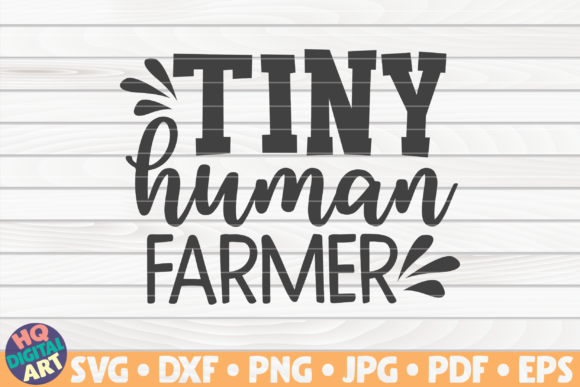
Tiny Human Farmer Teacher Quote Review
When I first opened the folder for Tiny Human Farmer Teacher Quote, my immediate reaction wasn't about the file formats or the technical specs. It was about the mood. There is a specific energy in a design that says "I love education" but wraps it in something warm, rustic, and undeniably cute. As someone who has stitched thousands of designs for client projects and personal gifts, I know that the difference between a design that looks good on a screen and one that holds up under the needle often comes down to this kind of character.
This piece feels like it belongs in a cozy classroom or a well-loved kitchen. The layout suggests a narrative, combining the rugged charm of farming with the nurturing spirit of teaching. For an embroidery designer, that narrative is gold. It transforms a simple text-based graphic into a story that customers can wear or display. But before you rush to your machine, let's look at how Tiny Human Farmer Teacher Quote actually performs when it moves from digital assets to a tangible handmade product.
First Impressions: Mood and Visual Personality
The strength of this design lies in its balance. It avoids being overly complex while still offering enough detail to feel premium. In the world of machine embroidery design, simplicity is often where the magic happens. If a design is too busy, the stitches fight each other, creating a muddy mess that loses definition after a few washes. Tiny Human Farmer Teacher Quote seems to respect the limits of thread and fabric.
The visual personality is friendly and approachable. It screams "personalized gift" rather than "corporate merchandise." This makes it incredibly versatile for Etsy sellers and small shop owners looking to create unique items. Whether you are making a tote bag design for a teacher appreciation week or a custom sweatshirt for a school fundraiser, this design carries a warmth that generic clipart simply cannot match. It creates an instant connection with the recipient, suggesting that the maker put thought into the project.
Real-World Application: From Screen to Stitch
Let's imagine a real scenario. You have a client who runs a boutique educational supply store. They want a line of aprons for their staff to wear during workshops. They need something that identifies them as educators but also nods to the hands-on nature of their work. Tiny Human Farmer Teacher Quote fits this perfectly.
When I visualize this stitched onto a canvas apron, the contrast of the thread against the heavy fabric would be striking. The design works beautifully as a focal point on the chest pocket or centered on the bib. However, if you were to try this on a sweatshirt embroidery project, you would need to be mindful of the stretch in the fabric. A design with tight curves needs a stable base to prevent puckering. For a baby item, like a onesie or a nursery pillow cover, the scale of the design would likely need adjustment. Tiny details can get lost on small garments, so checking the hoop size relative to the garment dimensions is crucial before committing to the full run.
I also see this design thriving on kitchen towels. The rustic theme aligns naturally with farmhouse decor trends. A set of embroidered towels featuring this quote could become a best-selling holiday gift or a staple for a wedding registry list. The versatility here is high, provided you adjust the thread colors to suit the background fabric.
Where Caution is Key: Technical Considerations
Even the best-looking design can fail if placed in the wrong environment. While Tiny Human Farmer Teacher Quote is robust, there are specific scenarios where you should proceed with care. First, consider the stitch density. If the design includes fine lines or tiny lettering, running it through a dense fill stitch might cause the fabric to pucker, especially on thin materials like light cotton or polyester blends.
If you are working with textured fabrics, such as boucle or heavy denim, the definition of the smaller details might get swallowed by the texture of the cloth. In these cases, testing on a scrap piece is non-negotiable. Similarly, if you plan to use this on a curved surface like a cap or a hat, the distortion caused by the curve can alter the proportions of the text. You may need to adjust the digitization or select a larger hoop to minimize the curvature effect.
Dense stitch areas are another potential pitfall. If the design relies heavily on fill stitch without enough running stitch or satin stitch breaks, the back of the embroidery might become stiff and uncomfortable. This is particularly important for custom apparel that will be worn frequently. Customers expect comfort, not a board sewn onto their shirt. Always check the back of the sample to ensure the stabilizer usage is appropriate for the fabric weight.
Impact on Brand and Customer Trust
In the competitive landscape of craft business and digital product sellers, the quality of your finished product speaks volumes about your brand. A poorly executed design can make even the most talented creator look unprofessional. Tiny Human Farmer Teacher Quote, when executed correctly, elevates the perceived value of the item. It signals attention to detail and a commitment to quality.
For an Etsy seller or a small shop product owner, using a design that resonates emotionally with the buyer is key to driving engagement. When a customer sees a beautifully stitched apron with this quote, they aren't just buying a towel; they are buying into the identity of the person who made it. This emotional connection fosters trust and encourages repeat business. Furthermore, a clean, well-stitched design translates better in printable mockups used for online listings, ensuring that what the customer sees matches what they receive.
Practical Designer Notes for Success
Before you start stitching, here are some essential steps to ensure your embroidery project is a success:
- Test on Scrap Fabric: Never cut into your final material without a test run. Use scrap fabric that matches the weight and texture of your intended project to check for puckering and tension issues.
- Check Thread Color Contrast: Ensure the thread colors chosen provide enough contrast against the fabric. Low contrast can make the design invisible, while high contrast ensures the message is clear.
- Review Stitch Density: Look closely at the file to identify areas of high density. If necessary, reduce the density or add water-soluble stabilizer to support the fabric during stitching.
- Confirm Hoop Size: Make sure your design fits within your machine's hoop. If the design is large, you may need to split it or use a multi-hoop technique.
- Inspect Small Details: Zoom in on the embroidery file to check for tiny corners or letters that might not stitch out cleanly. Sometimes, simplifying a detail improves the final result.
- Test in Black and White: Convert your design to grayscale to see how the shapes hold up without color distraction. This helps identify structural weaknesses.
- Verify Licensing: If you intend to sell finished items, confirm the licensing terms. Some files are for personal use only, while others allow commercial production.
Ultimately, Tiny Human Farmer Teacher Quote is more than just a collection of graphics; it is a tool for creating meaningful connections. Whether you are crafting a personalized gift for a loved one or building a catalog of commercial embroidery products, this design offers a solid foundation. By paying attention to the technical nuances and respecting the limitations of the medium, you can turn this digital asset into a cherished physical object that stands the test of time.
Remember, the goal is not just to stitch a design but to create a finished product that brings joy. With careful planning and a keen eye for detail, Tiny Human Farmer Teacher Quote can be the star of your next embroidery project, helping you build a reputation for quality and creativity in your craft business.